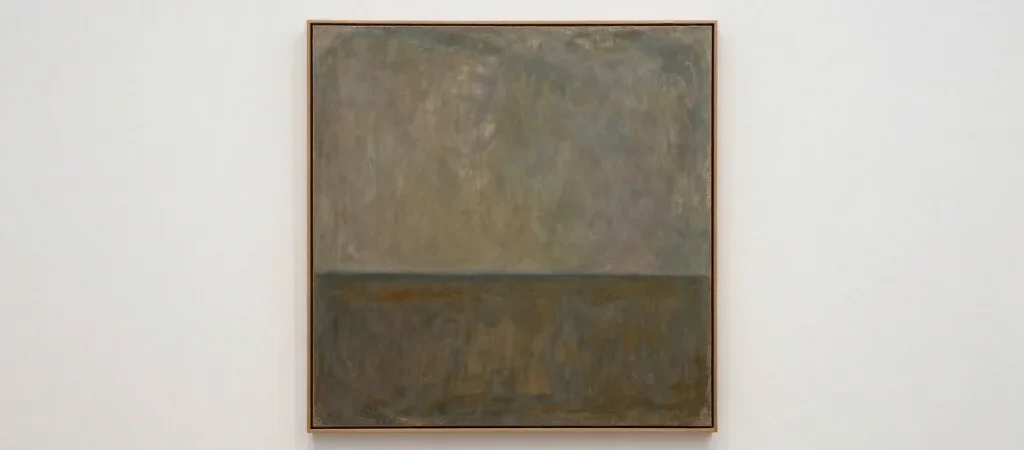
The first look often arrives before I have words for it. I think about what a painting can hold before I know exactly where it is going, and a viewer may meet the work in much the same open way. There is no single response I expect someone to have.
Begin with what you notice
Rather than searching for a correct interpretation, start with the part that holds your attention. It might be a shift in color, a shape, or simply the way the whole painting feels from across the room. Staying with that response can be more useful than trying to name the work’s meaning immediately.
Give the whole work space
A painting’s details matter, but they are part of a larger arrangement. Looking from a little farther away can change how those details relate to one another. If you are viewing a work online, a clear full image helps you take in that overall impression before you focus on close-up views.
Let interpretation stay open
The ideas behind a painting can offer a way in without closing down what you see for yourself. I keep returning to images and ideas that stay with me after the first look, but their place in the work may become clearer only over time. A description can provide context; it does not have to finish the conversation.